English
Vietnamese Cuisine: An English Overview
This site is written in German. This page gives English readers the essentials, plus an explanation of what this domain is and is not.
What this website is
anh-thu.de is a German-language journal about Vietnamese food. It covers the basics of the cuisine, the ingredients, the regional differences and individual dishes in detail.
It is not a restaurant. A Vietnamese restaurant called Anh Thu once operated at Kurfürstenstraße 31 in Munich-Schwabing. That restaurant is closed. There are no opening hours, no menu, no reservations and no delivery. The name and the address are part of the history of this domain, nothing more.
The five tastes and why they stay separate
Vietnamese cooking balances five tastes against each other: salty, sweet, sour, hot and bitter. Salt comes from fish sauce rather than a salt shaker. Sweetness comes from palm sugar or from long simmering. Sourness comes from lime, sometimes tamarind, sometimes pickled vegetables.
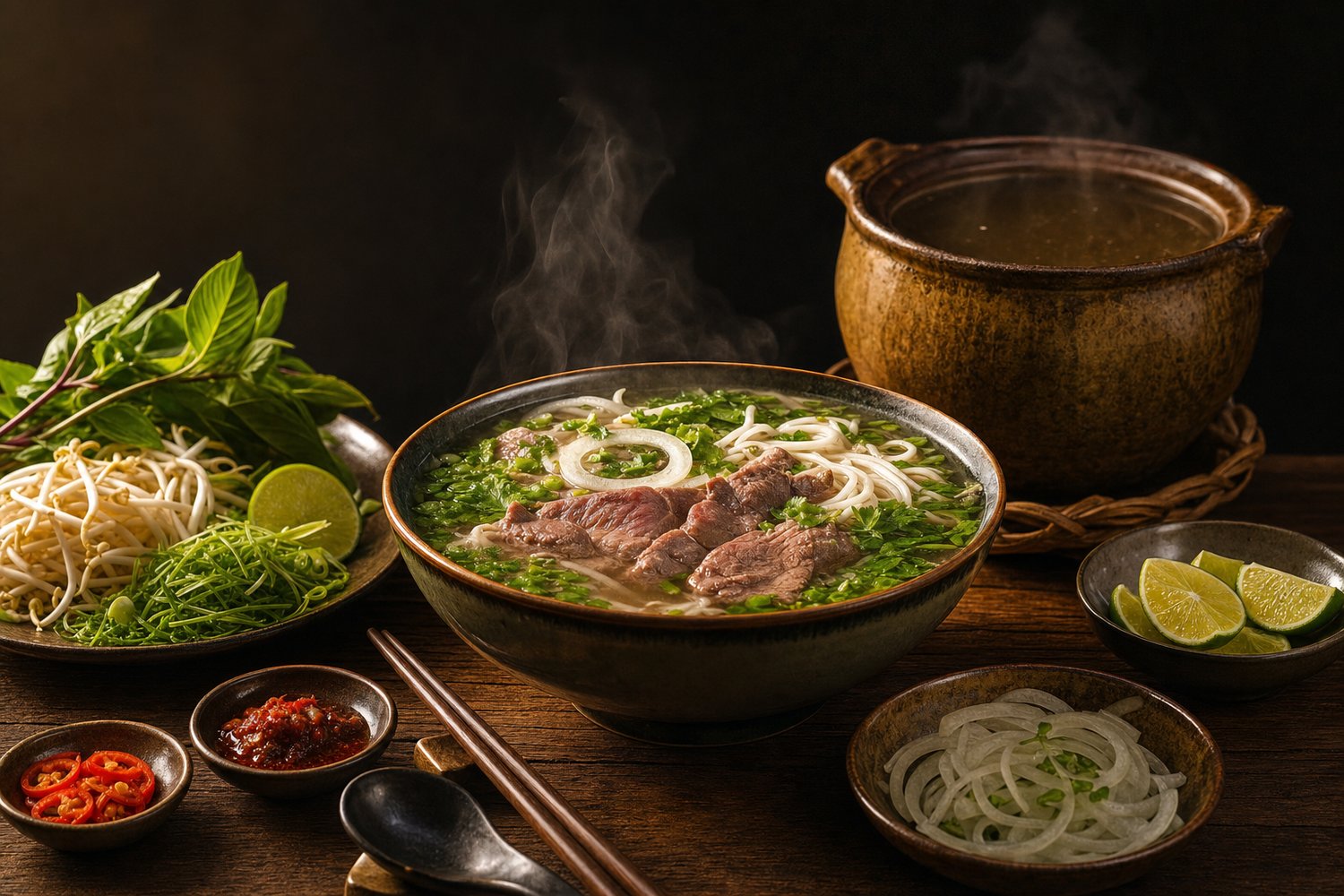
What matters is that these tastes stay distinct rather than blending into one. A bowl of soup arrives plain and is finished at the table: you add the herbs, you squeeze the lime, you decide on the chilli. The kitchen builds the base, the diner completes the dish.
Herbs are an ingredient, not a garnish
A bowl of noodle soup in Vietnam comes with a separate plate of Thai basil, coriander, mint, sawtooth herb and bean sprouts. This is not decoration. It is a third of the portion, and it is added handful by handful as you eat.
This has a practical consequence for cooking at home. Skimping on herbs produces a different dish, no matter how long the broth simmered. Conversely, a generous plate of herbs rescues a mediocre broth.
The broth carries the rest
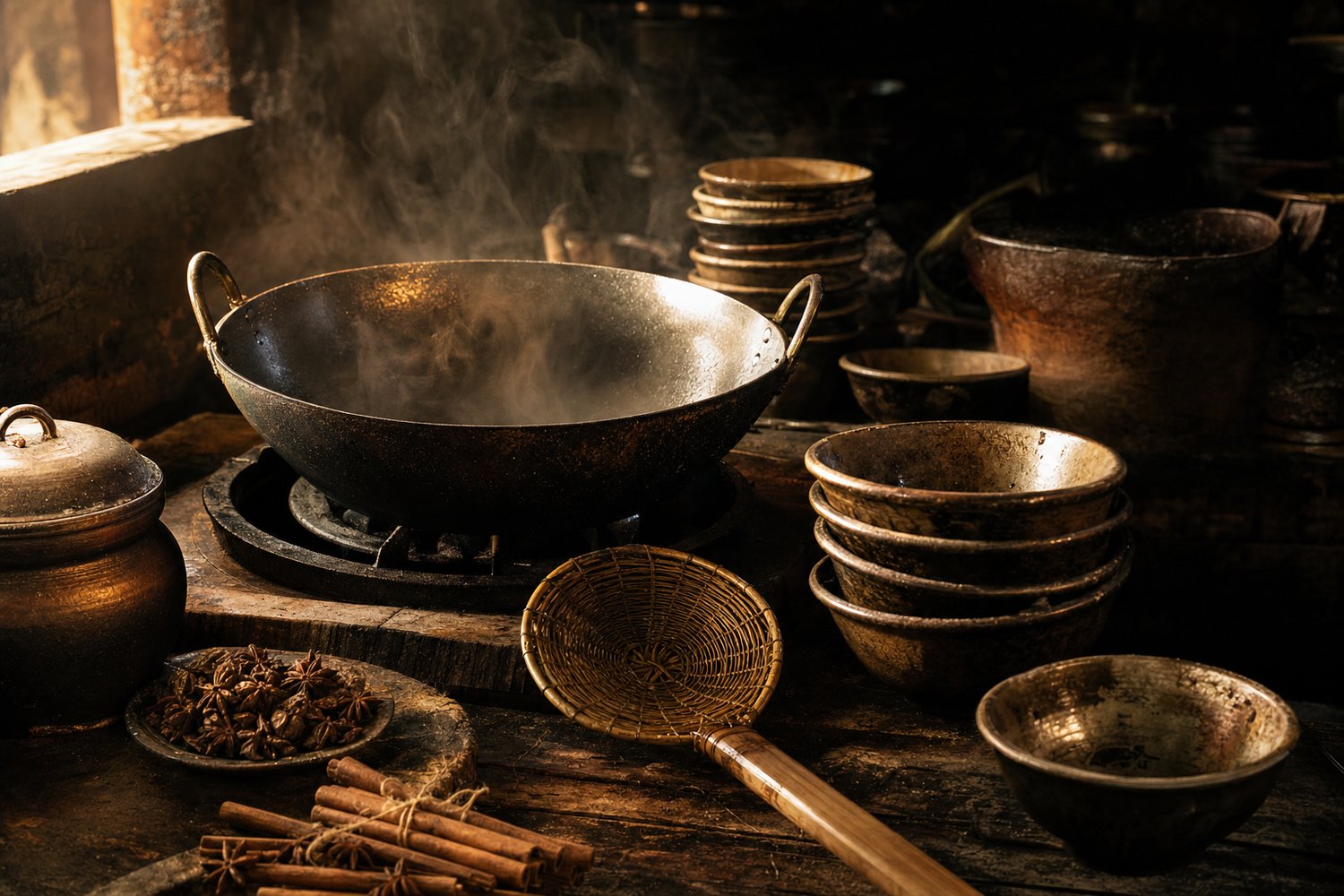
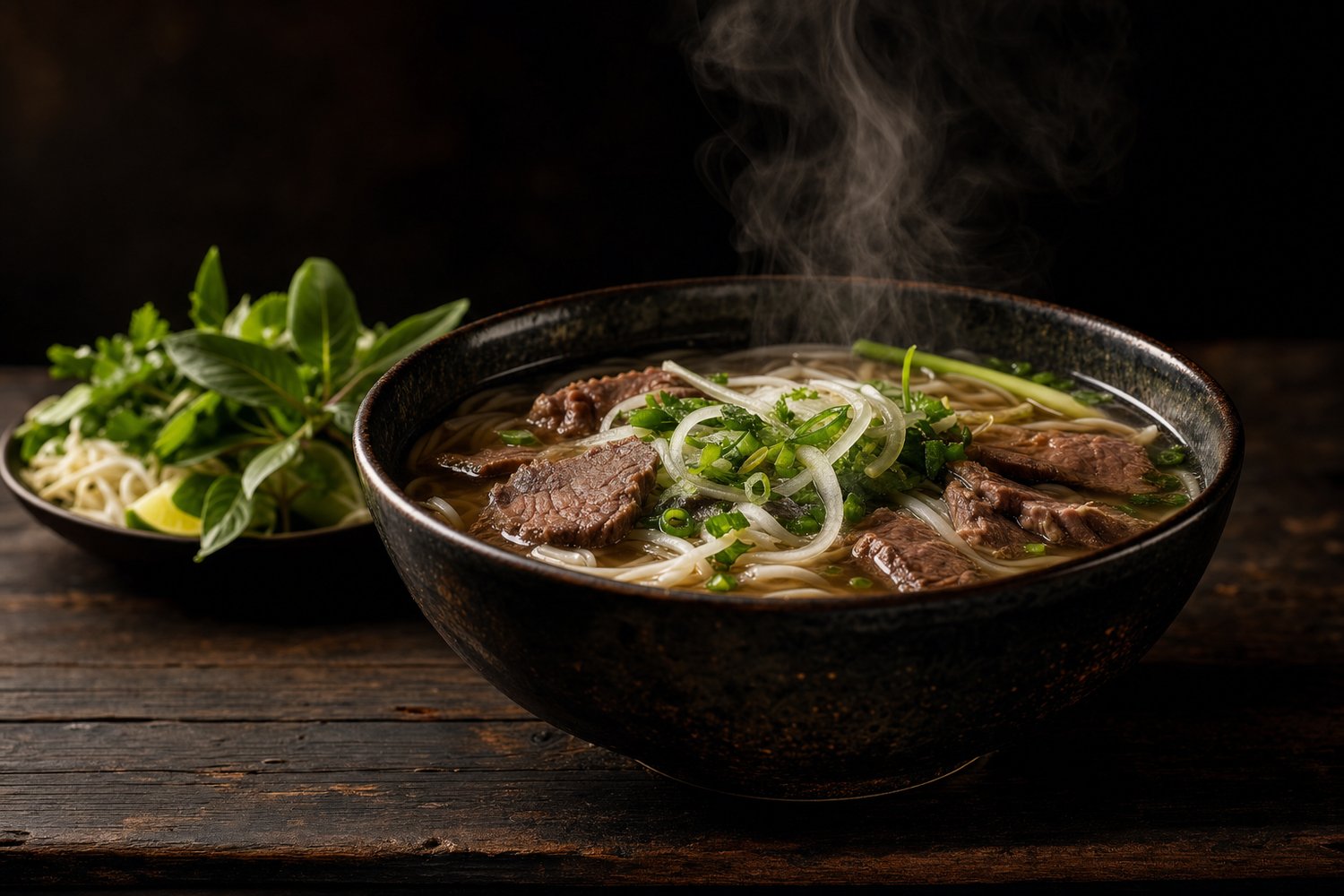
For the soup dishes, which make up most of the cuisine's international reputation, the work is in the broth. Beef bones or a whole chicken simmer for hours at a temperature where the surface barely moves. Onion and ginger are charred over an open flame first. Star anise, cassia bark, coriander seed and black cardamom are toasted dry and removed after about an hour.
Two mistakes cost the most flavour. Boiling hard turns the broth cloudy and bitter. Rushing it produces stock rather than broth. Below three hours, it is better to cook something that does not depend on a long broth.
Dishes worth knowing first
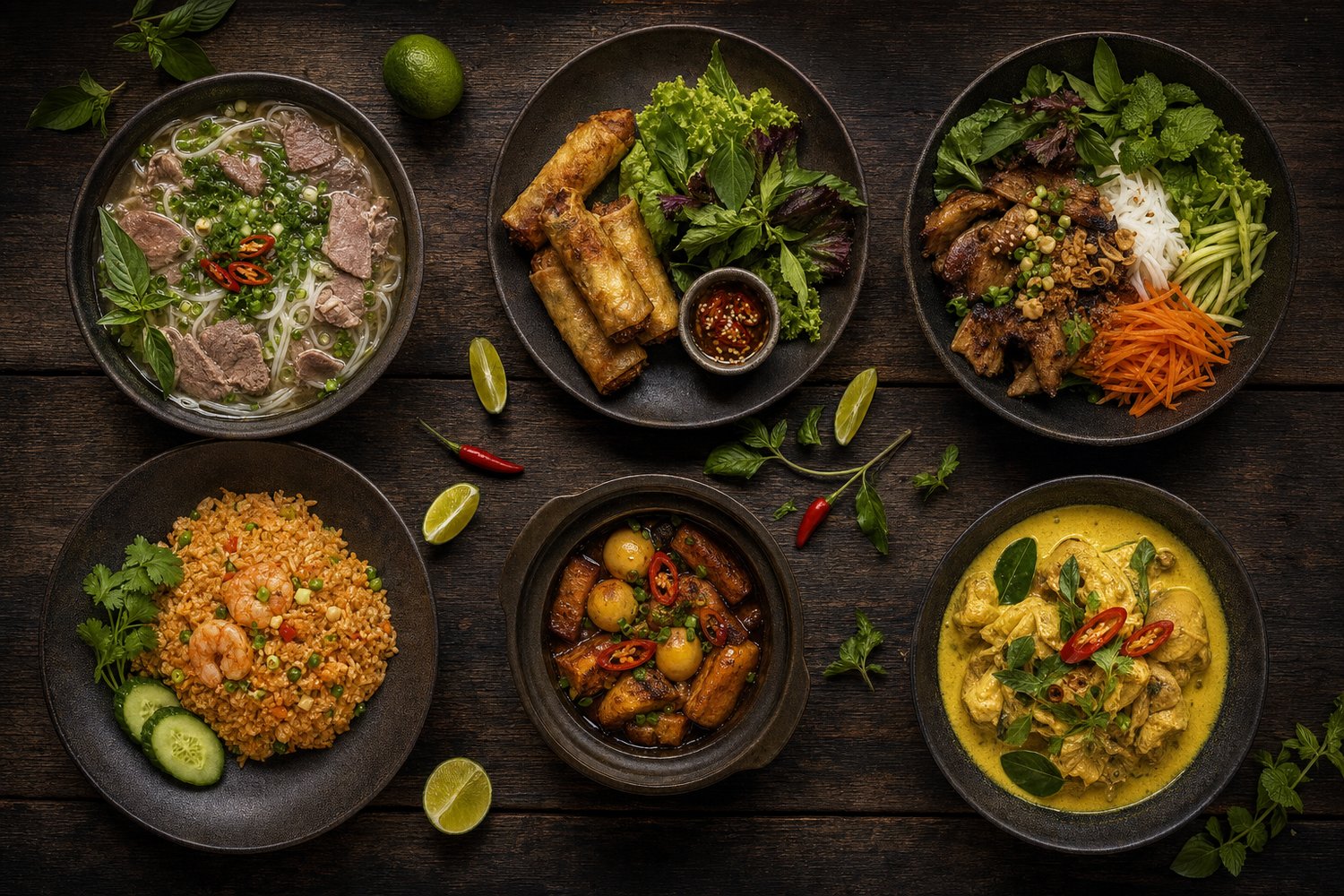
Four dishes cover the range. Phở gà is the calm one: clear chicken broth, flat rice noodles, little heat. Bún bò Huế is the forceful one from the old imperial city: beef broth with lemongrass and chilli oil, thick round noodles. Bún chả is grilled pork in a warm dipping broth with cold noodles and a pile of herbs. Mì Quảng uses almost no broth at all and works with turmeric, peanuts and a sesame cracker.
Two more are worth adding: Bánh mì, the filled baguette left behind by the colonial period, and Bánh xèo, the crisp rice pancake eaten wrapped in a lettuce leaf. All six have their own page here, in German.
Regions differ more than the label suggests
Vietnam is over 1,600 kilometres long. The north around Hanoi seasons sparingly, uses little sugar and rarely any chilli. The centre around Huế, the imperial capital from 1802 to 1945, cooks in many small, carefully arranged dishes and is the spiciest part of the country. The south around Saigon cooks sweeter, uses coconut milk more often and has the greatest access to fresh produce through the Mekong Delta.
The same dish therefore arrives differently depending on where you order it. The German-language regional overview sets this out dish by dish.
How the German articles are organised
The German-language part of this site has two entry points. The first is thematic: eight articles that start with the basics of the cuisine and move through aromatics, ingredients, regional differences, street food, vegetarian cooking and fusion. They build on each other but each one stands on its own.
The second entry point is by dish. Six pages describe one dish each, from the broth or the batter to the final bowl, with the main ingredients explained individually and the mistakes that most often spoil the result. If you read German well enough to follow a recipe, the dish pages are the more useful place to start.
Häufige Fragen
Kurze Antworten auf das, was am häufigsten gefragt wird.
Is Anh Thu still open as a restaurant?
No. The former restaurant at Kurfürstenstraße 31 in Munich-Schwabing is closed. This website is a journal about Vietnamese cuisine.
Is the whole website available in English?
No. The articles are written in German. This page summarises the essentials in English.
Which Vietnamese dish should a beginner try first?
Phở gà, the chicken version of the well known noodle soup. It is mild, the ingredients are easy to find and it shows the principle of the cuisine clearly.
Can I book a table or order food here?
No. There is no restaurant, no menu, no reservation and no delivery service.
Are the photographs on this website real?
No. All images were created with AI and are marked as such in the image, in the caption and in the alt text.
Weiterlesen